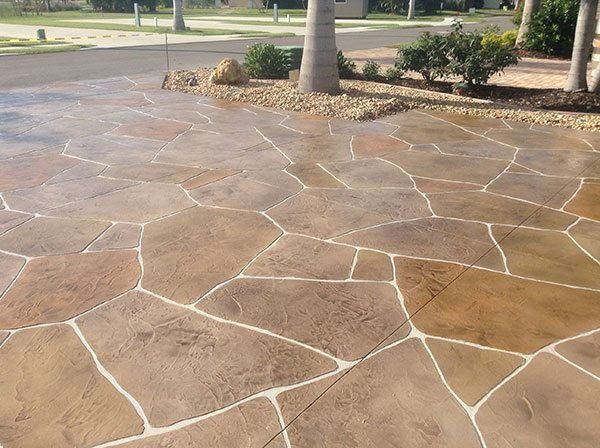
Plain gray concrete does its job. It holds up your car, carries foot traffic, and lasts for decades. But it rarely makes anyone stop and look twice at your home.
That’s where decorative concrete finishes come in. With the right texture, color, or pattern, the same driveway, patio, or walkway can look like natural stone, aged brick, or polished granite, often for far less than those materials cost.
In this guide, we walk through nine popular decorative concrete finishes, what each one costs, where it works best, and how Georgia’s heat, humidity, and red clay affect your choice. By the end, you’ll know which finish fits your home, your budget, and the way you actually use your outdoor space.
Quick Answer: Which Decorative Concrete Finish Is Best?
If you only have a minute, here’s the short version:
- Best for curb appeal on a budget: broom finish with a decorative border or integral color
- Best stone or brick look: stamped concrete
- Best for rich, one-of-a-kind color: acid or water-based stain
- Best natural texture and grip: exposed aggregate
- Best for refreshing old concrete: a decorative overlay
- Best for interiors and garages: polished concrete
There’s no single “best” finish. The right one depends on where the concrete is, how much traffic it gets, and the look you want for your home’s exterior.
What Are Decorative Concrete Finishes?
Decorative concrete finishes are treatments that change how concrete looks and feels. Some are applied while the concrete is still wet, like stamping, brooming, or seeding stones into the surface. Others are added after the slab has cured, like stains, overlays, and polishing.
The goal is simple: keep the strength and low cost of concrete while giving it the character of a premium material. For homeowners, that means more curb appeal, better resale appeal, and a surface that matches your home’s style instead of fighting it.
9 Decorative Concrete Ideas to Upgrade Your Home
These are the decorative concrete ideas we’re asked about most often, from the simplest upgrade to the most custom.
1. Broom Finish With a Decorative Twist
A broom finish is made by dragging a stiff broom across fresh concrete. It leaves fine ridges that add grip, which is why it’s the go-to choice for driveways, sidewalks, and pool surrounds.
On its own, it’s basic. But you can dress it up with a smooth-troweled border, a stamped band along the edges, or a curved broom pattern. These small touches cost little and make a standard slab look custom.
Best for: driveways, walkways, and budget-friendly upgrades
2. Stamped Concrete
Stamped concrete is the most popular of all decorative concrete finishes. Installers press textured mats into fresh concrete to copy the look of slate, flagstone, cobblestone, brick, or even wood planks. Color hardeners and release agents add depth and a natural, two-tone look.
Stamped concrete gives you the look of stone or pavers in one continuous slab, with no joints for weeds to grow through. It does need a quality sealer every two to three years to protect the color.
Best for: patios, pool decks, front entries, and driveways
3. Stained Concrete (Acid and Water-Based)
Concrete stain soaks into the surface rather than sitting on top like paint, so it won’t peel.
- Acid stain reacts with minerals in the concrete to create earthy, marbled tones like tan, brown, and soft green. No two slabs look exactly alike.
- Water-based stain offers a wider range of colors, including grays, blues, and bolder shades, with more even coverage.
Stain is a smart way to add color to an existing slab without tearing it out, as long as the concrete is in good shape.
Best for: patios, covered porches, basements, and interior floors
4. Exposed Aggregate
To create exposed aggregate, crews remove the top layer of cement paste to reveal the stones mixed into the concrete. You can choose river rock, granite, quartz, or colored pebbles to match your home.
The result is a natural, textured surface with excellent slip resistance. It also hides dirt and tire marks well, which makes it a strong pick for driveways.
Best for: driveways, pool decks, and walkways
5. Stenciled Concrete
Stenciling uses paper or plastic templates laid on fresh concrete before color is applied. When the stencil is removed, it leaves crisp “grout lines” in patterns like brick, tile, or custom designs.
Stencils produce a flatter surface than stamping, which some homeowners prefer for comfort underfoot. They’re also great for borders, medallions, or even a house number at the end of the driveway.
Best for: patios, walkways, and accent borders
6. Integral Color
Integral color is pigment mixed right into the concrete before it’s poured. Because the color goes all the way through, scratches and chips don’t reveal gray concrete underneath.
It’s a subtle upgrade, but warm tones like buff, sand, or terra cotta can tie your driveway or patio to your brick, siding, or roof. It pairs well with broom, stamped, and exposed aggregate finishes.
Best for: new driveways, patios, and any project where color needs to last
7. Decorative Overlays
If your concrete is structurally sound but stained, worn, or dated, an overlay may save you the cost of replacement. Overlays are thin layers of polymer-modified cement applied over existing concrete. They can be stamped, stained, or troweled smooth.
Common types include:
- Stamped overlays for a stone or brick look on an old slab
- Spray-down or knockdown texture for cool, slip-resistant pool decks
- Micro-toppings for a smooth, modern finish
One caution: overlays can’t fix a slab that’s cracking from settling or poor drainage. Those issues need to be repaired first.
Best for: refreshing old patios, porches, and pool decks
8. Polished Concrete
Polished concrete is ground and buffed with progressively finer diamond tools until it shines. You can choose a matte, satin, or high-gloss level.
It’s mostly an interior finish, used in garages, basements, and modern living spaces. Outdoors, a high polish can be slippery when wet, so we usually recommend a textured finish instead.
Best for: garages, basements, and interior floors
9. Salt and Swirl Finishes
A salt finish is made by pressing rock salt into wet concrete and washing it away after it sets. It leaves small pits that give the surface a soft, weathered texture that stays cooler underfoot.
A swirl finish uses a trowel in circular motions to create a decorative pattern with added traction. Both are affordable ways to add character without the cost of stamping.
Best for: pool decks, patios, and walkways
Decorative Concrete Finishes Compared: Cost, Upkeep, and Durability
The table below shows typical installed price ranges and how each finish holds up. Prices are rough national ballpark figures. Your cost will depend on site prep, project size, pattern, and access.
| Finish | Typical Cost (per sq. ft.) | Slip Resistance | Sealing Needed | Best Use |
| Broom with border | $6 to $10 | High | Optional | Driveways, walkways |
| Stamped | $12 to $18 | Medium | Every 2 to 3 years | Patios, entries |
| Stained (existing slab) | $3 to $8 | Medium | Every 2 to 3 years | Patios, interiors |
| Exposed aggregate | $8 to $15 | High | Every 2 to 3 years | Driveways, pool decks |
| Stenciled | $10 to $16 | Medium | Every 2 to 3 years | Patios, borders |
| Integral color | Adds $1 to $3 | Varies by finish | Recommended | Any new pour |
| Overlay | $4 to $12 | Varies | Every 2 to 3 years | Resurfacing |
| Polished | $4 to $12 | Low when wet | Densifier, not sealer | Interiors, garages |
| Salt or swirl | $7 to $12 | High | Recommended | Pool decks, patios |
Cost ranges are general estimates for planning only. Ask for a written, itemized quote for your property.
Choosing Concrete Home Exterior Finishes That Match Your Style
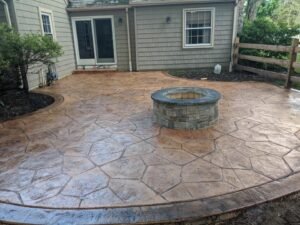
The best concrete home exterior finishes don’t just look good on their own. They work with your house. Here’s how to match finish to style:
- Traditional or colonial homes: Running bond brick or cobblestone stamps in red or brown tones
- Craftsman and farmhouse homes: Ashlar slate or wood-plank stamps in warm, earthy colors
- Modern homes: Smooth troweled or broom finishes in charcoal, light gray, or a sleek micro-topping
- Ranch and Southern homes: Flagstone stamps or exposed aggregate in sand and buff shades
A good rule of thumb: pull one color from your roof, brick, or trim and use it as your main concrete tone. Then use a darker accent color on borders or joints. For more patio-specific design help, see our guide to Concrete Patio Finishes.
How Georgia’s Climate Affects Decorative Concrete
Decorative concrete performs well in Georgia, but local conditions should shape your choice.
Heat and Sun
Georgia summers are long and hot. Dark colors and smooth surfaces can get uncomfortably warm underfoot, especially around pools. Lighter tones and textured finishes like salt, knockdown, or exposed aggregate stay cooler. UV-resistant sealers also help keep colors from fading.
Humidity and Rain
Heavy rain and humidity can lead to mold, mildew, and slippery surfaces. A breathable sealer lets moisture escape so it doesn’t get trapped and cause a cloudy, white haze. Adding a fine grit to the sealer improves traction on stamped patios and pool decks.
Red Clay and Drainage
Much of metro Atlanta sits on red clay, which swells when wet and shrinks when dry. No finish can stop cracks caused by a poor base. Proper grading, a compacted gravel base, and well-placed control joints matter just as much as the decorative finish on top.
How to Keep Decorative Concrete Looking New
Most decorative concrete finishes need only light care to last for decades:
- Seal on schedule. Most outdoor finishes need resealing every two to three years, sooner on high-traffic driveways.
- Clean gently. Use a mild cleaner and a soft brush or low-pressure rinse. High-pressure washing too close to the surface can damage sealers and stains.
- Avoid harsh chemicals. Rock salt and some deicers can damage the surface. Use sand for traction during a rare freeze.
- Handle stains fast. Wipe up oil, grease, and leaf stains before they soak in.
DIY vs. Hiring a Decorative Concrete Contractor
Some small jobs, like resealing a patio or cleaning a stained slab, can be done yourself. But most decorative concrete finishes depend on timing and skill. Stamping, for example, has to happen within a short window while the concrete is still workable. Miss it, and the pattern can come out shallow or uneven, which is hard to fix.
When you’re comparing contractors, ask:
- Can I see photos of finished projects like mine?
- Are you licensed and insured in Georgia?
- What base prep and reinforcement do you use?
- Which sealer do you recommend, and when will it need reapplying?
- Do you offer a written warranty on workmanship?
If you’re in Paulding County or nearby, working with experienced Concrete Contractors in Hiram, GA gives you local insight into soil, drainage, and the finishes that hold up best in our area.
Frequently Asked Questions About Decorative Concrete Finishes
What is the most popular decorative concrete finish?
Stamped concrete is the most popular choice for patios, entries, and pool decks because it copies the look of stone, brick, or wood at a lower cost than those materials.
Which decorative concrete finish is best for a driveway?
Exposed aggregate and broom finishes are top choices for driveways. Both offer strong traction and hide tire marks well. Stamped driveways also work but need regular sealing to handle vehicle traffic.
Can decorative finishes be added to existing concrete?
Yes. Stains, overlays, and stenciled overlays can transform an existing slab, as long as it’s structurally sound. Badly cracked or sunken concrete usually needs repair or replacement first.
How long do decorative concrete finishes last?
With a solid base and regular sealing, most decorative concrete finishes last 25 years or more. The color and sealer layer may need refreshing every few years.
Is decorative concrete slippery?
It can be when wet, especially smooth or sealed surfaces. Choosing a textured finish or adding an anti-slip additive to the sealer makes a big difference around pools and steps.
Does decorative concrete add value to a home?
Decorative concrete can boost curb appeal, which often helps when it’s time to sell. The actual return depends on your market and the quality of the work.
Make Your Home Stand Out With Big D’s Concrete
The right finish can turn an ordinary slab into one of the best features of your home. Whether you want the stone look of stamped concrete, the natural grip of exposed aggregate, or a fresh overlay on an old patio, decorative concrete finishes give you style and durability at a fair price.
At Big D’s Concrete LLC, we design and install decorative driveways, patios, walkways, and pool decks for homeowners in Atlanta, Austell, Mableton, Hiram, Dallas, and nearby communities. We’re licensed and insured, with 7 years of experience serving Georgia properties.
Looking for Professional Concrete Contractors in GA? Call Big D’s Concrete LLC at (404) 581-2903 for your free estimate, and let’s find the finish that makes your home stand out.