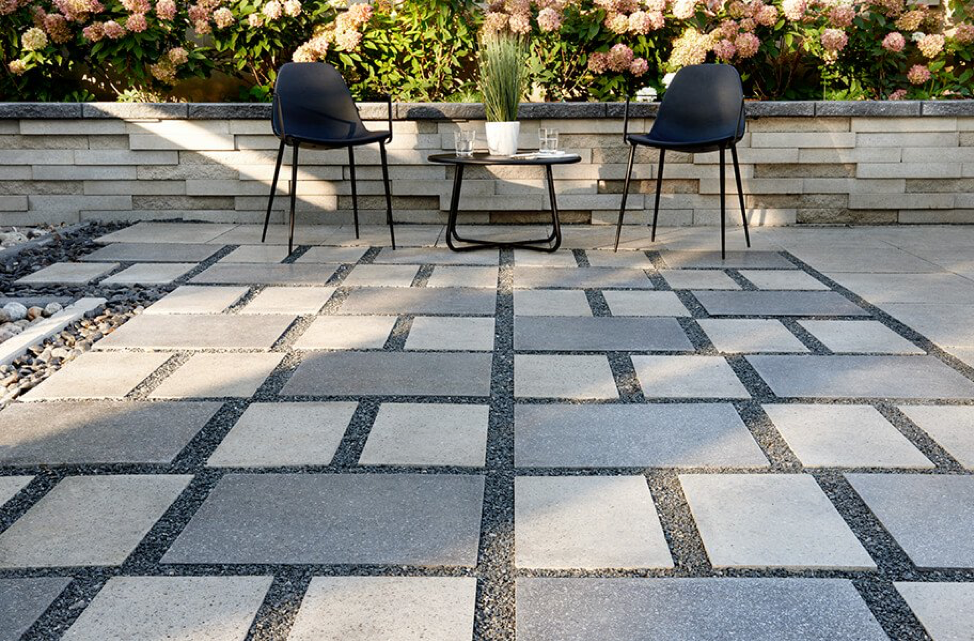
You’re ready for a new driveway or patio, and you’ve narrowed it down to two choices: a smooth poured slab or a surface built from concrete pavers. Both are made from concrete. Both can look great. But they perform very differently over 20 or 30 years, and the right pick depends on your budget, your soil, and how you plan to use the space.
Here in Georgia, that choice matters even more. Red clay soil, heavy summer storms, and the occasional winter freeze all put stress on outdoor surfaces.
In this guide, we compare concrete pavers and poured concrete on cost, strength, repairs, maintenance, and design, so you can decide with confidence before you get quotes.
Quick Answer: Pavers vs. Poured Concrete
If you only have a minute, here’s the short version:
- Choose concrete pavers if you want the longest service life, easy spot repairs, more design freedom, and better tolerance for shifting soil.
- Choose poured concrete if you want the lowest upfront price, a smooth, seamless surface, and a faster install on a simple, well-drained site.
Neither is “better” in every case. Pavers usually win on long-term value and looks. Poured concrete usually wins on day-one cost. The rest of this guide shows where each one makes sense.
What Are Concrete Pavers?
Concrete pavers are individual units made from a dense, dry concrete mix that is pressed into molds and cured in a factory. Because they’re made under controlled conditions, they come out very strong and consistent.
The industry standard for interlocking pavers, ASTM C936, calls for an average compressive strength of at least 8,000 psi. A typical residential driveway slab is poured at about 3,000 to 4,000 psi. The Concrete Masonry and Hardscapes Association (CMHA) says pavers are made with two to three times the strength of typical poured concrete.
On site, pavers are laid as a system:
- A compacted crushed-stone base that carries the load
- A thin bedding layer of sand
- The pavers, set in a chosen pattern
- Joint sand swept between units so they lock together
That “interlock” lets the surface flex slightly with the ground instead of cracking.
What Is Traditional Poured Concrete?

Traditional concrete is mixed wet, poured on site into forms, leveled, finished, and left to cure as one solid slab. It’s often reinforced with rebar or wire mesh and cut with control joints to guide where cracks form.
Poured concrete can be plain broom-finished, stamped to look like stone, stained, or given an exposed aggregate finish. It’s a proven, affordable surface. Its main weakness is that it’s rigid. When the ground under it moves, the slab can crack.
Side-by-Side Comparison
| Factor | Concrete Pavers | Poured Concrete |
| Upfront cost (driveway) | About $10 to $20 per sq. ft. installed | About $4 to $8 per sq. ft. for basic; $12 to $18 for stamped |
| Strength | 8,000+ psi units (ASTM C936) | About 3,000 to 4,000 psi for most home slabs |
| Typical lifespan | 25 to 75+ years with good base | 30 to 50 years, with cracking common along the way |
| Cracking | Joints absorb movement; units rarely crack | Cracks are expected over time |
| Repairs | Lift and replace single pavers | Cut out and repour; patches often show |
| Ready to use | Same day in most cases | About 7 days for cars, longer for full strength |
| Design options | Hundreds of shapes, colors, and patterns | Broom, stamped, stained, or exposed aggregate |
| Maintenance | Sweep, re-sand joints, optional sealing | Seal, fill cracks, clean stains |
Cost ranges are national averages reported by HomeGuide. Your price will depend on site prep, access, pattern, and materials. Ask for a written estimate for your property.
Cost: Upfront Price vs. Long-Term Value
Poured concrete is cheaper to install. There’s less labor per square foot because crews pour and finish one large slab instead of setting thousands of units by hand.
But the full picture includes what happens after year one. A poured slab that cracks or settles may need patching, crack sealing, or full panel replacement. Those repairs rarely match the original color.
With concrete pavers, a sunken or stained section can be pulled up, the base fixed, and the same pavers relaid. You aren’t paying to tear out and repour. Over 25 to 30 years, that often narrows the cost gap, and pavers can add more curb appeal and resale value along the way.
Bottom line: If your budget is tight right now, poured concrete gets the job done. If you’re planning to stay in your home a long time, pavers often deliver more value per year of use.
Durability and Strength in Georgia Conditions
Most hardscape failures don’t start with the surface. They start underneath. That’s why the base and the local climate matter so much.
Red Clay and Shifting Soil
Much of metro Atlanta sits on red clay. Clay holds water when it rains, then shrinks as it dries out. That cycle makes the ground swell and settle. A rigid slab can’t flex, so it cracks. Concrete pavers sit on a compacted stone base and move as a group, so small shifts rarely show up as cracks.
Heavy Rain and Drainage
Georgia gets frequent heavy downpours. Water that pools under a slab can wash out the soil beneath it and cause sinking. Pavers drain through their joints into the stone base. Permeable pavers go further, letting rainwater soak into the ground instead of running off into your yard or street.
Heat and Occasional Freezes
Summer heat makes concrete expand, and winter cold snaps make it contract. Poured slabs handle this with control joints, but cracks can still spread beyond them. With pavers, every joint acts as a small expansion gap, which spreads out the stress.
Repairs and Maintenance
Maintaining Poured Concrete
- Seal every 2 to 5 years to protect against stains and water.
- Fill hairline cracks early before water gets in.
- Clean oil and red clay stains quickly.
- Plan for patching or panel replacement over the long term.
Maintaining Concrete Pavers
- Sweep and rinse regularly.
- Top up joint sand when it washes out, often every few years.
- Pull weeds or moss from joints, or use polymeric sand to block them.
- Seal if you want richer color and extra stain protection.
- Lift and reset any sunken pavers instead of replacing the whole area.
The biggest difference is repair. A paver repair can blend in so well you can’t spot it. A concrete patch almost always shows.
Concrete Paver Design Options
This is where pavers really stand out. Concrete paver design gives you far more choices than a poured slab:
- Shapes: Rectangles, squares, cobblestone, large-format slabs, and interlocking “I” or “Z” shapes.
- Patterns: Herringbone (best for driveways), running bond, basketweave, and random multi-size layouts.
- Colors and blends: Earth tones, grays, charcoal, and blended colors that hide dirt and wear.
- Textures: Smooth, tumbled for an aged look, or finishes that mimic natural stone.
- Borders and inlays: Contrasting soldier courses, circles, and accents to frame a space.
Poured concrete can still look sharp. Stamped and stained finishes add pattern and color at a lower price. But stamped color can fade, and control joints cut across the design.
If you’re still dreaming up your backyard, browse our Concrete Patio Ideas for layouts built for dining, relaxing, and entertaining.
Driveways vs. Patios vs. Walkways: Which Surface Fits Best?
Driveways
Driveways carry the heaviest loads. Pavers made for vehicles (usually 80 mm, or about 3 1/8 inches, thick) set in a herringbone pattern handle weight and turning tires well. Poured concrete also works for driveways when it’s thick enough, reinforced, and placed on a well-prepared base.
Patios
For patios, looks and comfort matter most. Pavers offer textured, slip-resistant surfaces and endless design choices. A broom-finished or stamped slab is a budget-friendly option for a simple, clean look.
Concrete Paver Walkways
Concrete paver walkways are one of the most popular uses. They curve easily, connect patios, gardens, and entries, and look high-end without a huge budget. Because walkways often sit near tree roots, the ability to lift and reset pavers is a big plus.
Commercial Concrete Pavers for Businesses
Commercial concrete pavers are a smart choice for plazas, storefronts, office entries, HOA common areas, and parking areas with light traffic. Businesses choose them because:
- Damaged areas can be repaired fast, with little downtime.
- Crews can lift pavers to reach utility lines, then put them back.
- Permeable systems can help manage stormwater runoff on site.
- Colors and patterns can mark walkways, crosswalks, and brand-friendly entrances.
For large commercial lots with constant heavy traffic, poured concrete or a mix of both may be the more practical pick. A local contractor can help you weigh traffic, drainage, and budget.
What the Concrete Paver Installation Process Looks Like
A quality concrete paver installation follows clear steps. Knowing them helps you compare quotes.
- Site visit and layout: Measure the area, check drainage, and choose pattern and color.
- Excavation: Dig out soil to the right depth. Driveways need a deeper base than walkways.
- Base installation: Spread and compact crushed stone in layers. This is the step that decides how long your pavers last.
- Bedding layer: Screed a thin, level layer of sand.
- Laying pavers: Set the pavers in the pattern and cut edge pieces to fit.
- Edge restraint: Install edging so the pavers can’t spread apart.
- Compaction and joint sand: Compact the surface and sweep sand into the joints to lock it all together.
Tip: Ask every contractor how deep they’ll dig and how thick the base will be. A cheap quote often means a thin base, and a thin base is the top reason pavers sink.
Pros and Cons at a Glance
Concrete Pavers
Pros: Very strong, easy spot repairs, flexible on shifting soil, huge design range, usable right away, good drainage options.
Cons: Higher upfront cost, longer install time, joint sand needs occasional upkeep, and weeds can sprout if joints aren’t maintained.
Poured Concrete
Pros: Lower upfront cost, fast to install on large areas, smooth surface, many decorative finishes.
Cons: Cracks are likely over time, repairs are visible, needs curing time before use, and less forgiving on clay soil.
So, Which Should You Choose?
Go with concrete pavers if:
- You plan to stay in your home for many years.
- Your yard has clay soil, slopes, or drainage problems.
- You want a custom look with patterns, borders, and color blends.
- You want repairs that blend in.
Go with poured concrete if:
- Upfront budget is your top concern.
- The site is flat and well drained.
- You want a smooth, seamless surface.
- The area is large and simple, like a basic side pad or secondary driveway.
Still undecided? Many homeowners mix both, using a poured driveway with a paver border, or a slab patio with a paver walkway. Working with Quality Concrete Contractors in Austell, GA gives you an honest look at your soil, drainage, and budget before you commit.
Frequently Asked Questions About Concrete Pavers
Are concrete pavers stronger than poured concrete?
Yes, by the unit. Pavers made to ASTM C936 must average at least 8,000 psi, while most home slabs are about 3,000 to 4,000 psi. Long-term performance still depends on a well-built base.
How long do concrete pavers last?
With a properly compacted base and basic care, concrete pavers often last 25 to 50 years or more. Individual units can be replaced, which extends the life of the whole surface.
Do concrete pavers increase home value?
Pavers can boost curb appeal, which often helps resale. The exact return depends on your market, home, and the quality of the install.
Do weeds grow between pavers?
They can if joint sand washes out. Using polymeric sand and topping up joints when needed keeps most weeds and ants out.
Can you drive on pavers right after installation?
In most cases, yes. Because pavers are cured before they arrive, you can usually use the surface right after installation. Poured concrete typically needs about a week before cars can park on it.
Are pavers or concrete better for a pool deck?
Pavers are a popular pool deck choice. They’re slip resistant when textured, stay cooler in lighter colors, and can be lifted if pool plumbing ever needs work.
Get Expert Help With Your Driveway or Patio
The best surface is the one that fits your property, budget, and plans. Concrete pavers offer strength, easy repairs, and design freedom that’s hard to beat. Poured concrete offers solid performance at a lower starting price. Either one will last when it’s built on the right base.
At Big D’s Concrete LLC, we design and install driveways, patios, walkways, and commercial hardscapes for homeowners and businesses in Atlanta, Austell, Mableton, Hiram, Dallas, and nearby communities. We’re licensed and insured, with 7 years of experience serving Georgia properties.