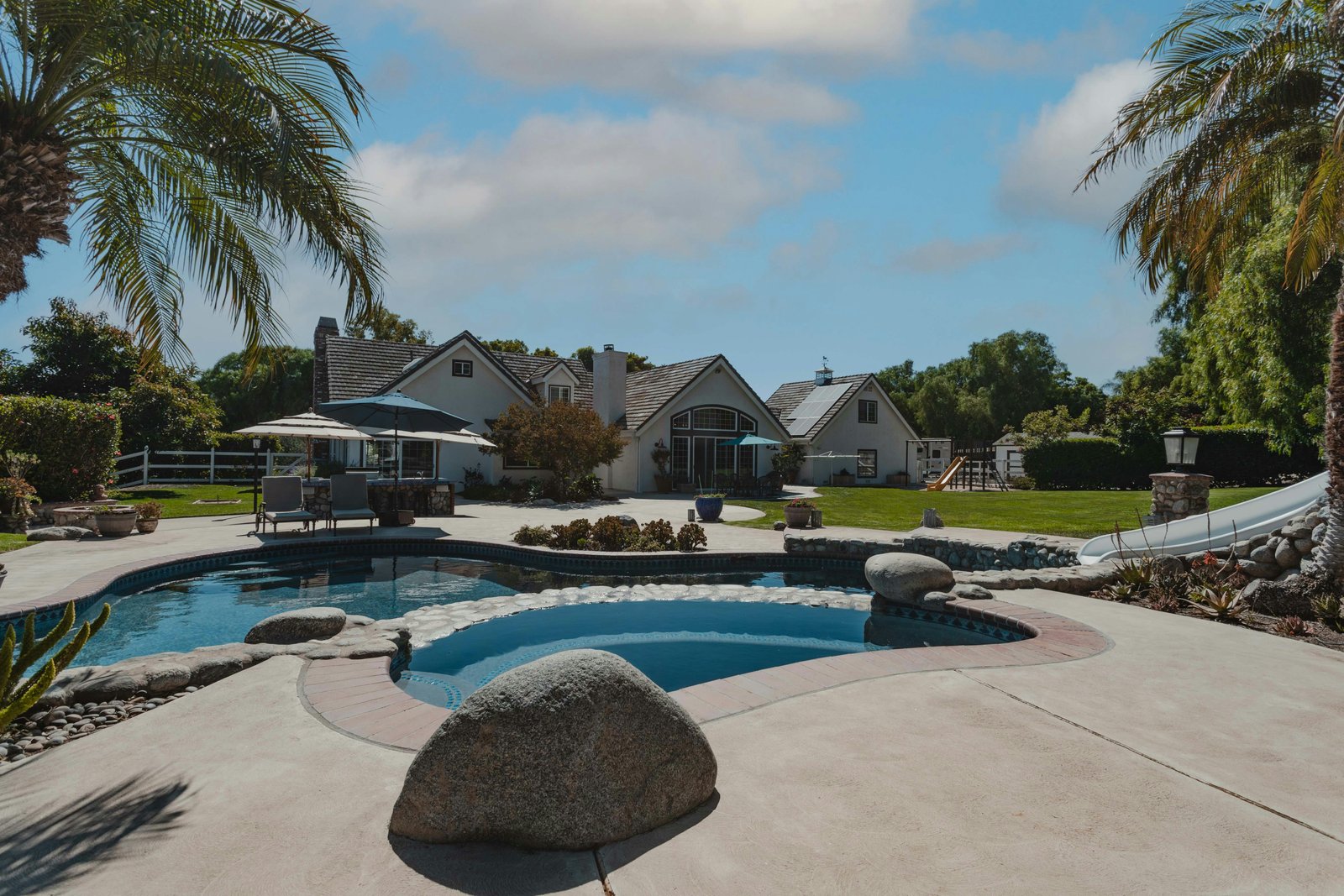
Head down the street in any established Atlanta area — Austell, Dallas, Hiram — and you’ll see the same thing: either the patios look like they belong in a magazine, or they’re covered in a spiderweb of cracks nobody wants to talk about. Usually the difference is not the concrete. It’s like someone identified the little problems early, chose the proper pattern for the area, and engaged a crew that actually knows what Georgia clay and summer heat do to a slab over time.
At Big D’s Concrete LLC, we’ve poured, stamped, and repaired patios all around the metro long enough to know a wonderful outdoor space isn’t just about choosing a gorgeous pattern from a brochure. It’s the base underneath it, the sealer on top of it, and the contractor standing behind it. From stamped concrete repair to new stamped concrete patio designs, this article walks you through what really matters—so you can make a decision you won’t regret two years from now.
Why Atlanta Homeowners Are Rethinking Their Patios Right Now
Until it’s too late, homeowners in Atlanta don’t realize how hard the weather is on concrete. The soil that is heavy in clay experiences expansion and contraction cycles during each wet spring and dry August. The hairline fractures are widened by the tension of the January freeze-thaw cycles, and the pollen season creates a layer that holds moisture against the surface. Within a few seasons, flaking edges, faded color, or cracks creeping toward the house will be visible on a patio that was poured without correct joint spacing or a compacted base.
That’s exactly why interest in stamped concrete keeps climbing here. Done right, it gives you the texture of slate, flagstone, or brick without loose pavers shifting underfoot or weeds pushing through joints. Done wrong — or left unmaintained — it becomes the exact eyesore homeowners were trying to avoid. The good news: most damaged patios don’t need a full tear-out. They need an honest evaluation and, often, a repair plan that costs a fraction of replacement.
Stamped Concrete Repair: When to Fix It vs. When to Replace It
More people ask us this than almost any other subject, and the internet isn’t forthcoming with adequate, honest answers. Crash Day isn’t always triggered by every break. A trusted Concrete Contractor in Dallas GA can help you understand what is really causing the issue and whether it needs professional attention.
Signs your patio is a good repair candidate:
- Surface cracks under 1/4 inch that haven’t shifted vertically
- Color fading or a worn-out sealer with the slab itself still structurally sound
- Small chips or spalling near edges and control joints
- Minor settling in one corner without widespread heaving
Signs you’re looking at a full replacement:
- Cracks greater than 1/2 inch broad with apparent differential elevation on either side
- Large chunks that have broken away from the base completely
- Repeated failure at the same place after previous patching
- A slab that was poured with no support or drainage at the beginning
In order to repair and blend in instead of looking like a patch job, a competent crew can restamp the damaged portion, color-match it to the existing pattern, and reseal the entire surface. Many contractors neglect this step since it requires patience and more than just a bag of resurfacer to match the texture and hue. Before we resurface a slab that is crumbling underneath, we do foundation tests for our Atlanta stamped concrete repair clients. This prevents the same problem from occurring for another year or two.
Stamped Concrete Patio Ideas Worth Considering for Atlanta Homes
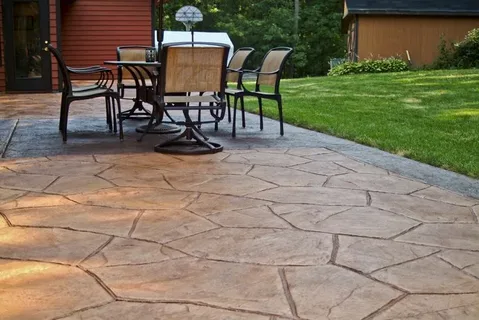
Once repair or new installation is on the table, the design conversation gets fun. A few patterns and combinations we’re seeing requested most across Atlanta backyards this year:
- Ashlar slate patterns in warm charcoal or tan tones — pair naturally with brick homes common in older Atlanta neighborhoods
- Wood-plank stamped concrete for a modern deck look without the rot, splinters, or annual staining.
- Two-tone borders constructing an uncomplicated running-bond field that manages to appear both personalized and reasonably priced
- Fire pit surrounds are imprinted to coordinate with the primary patio, visually connecting the many outside gathering spaces.
- Textured overlays on existing slabs for homeowners who like their current footprint but want the worn look gone
The best-looking patios usually restrain themselves to one dominant pattern and one accent color rather than stacking multiple textures. It photographs better, ages better, and costs less to maintain long-term.
What moves a project up or down that range:
- Site access and grading: A backyard with a tight approach via a side gate costs more to prepare than an open lot.
- Existing slab condition: Usually much cheaper to repair and restamp than full demo and replacement.
- Pattern and color complexity: Each extra color pass and manually crafted edge increases labor time
- Drainage correction: Address the pooling of water toward your foundation before it causes water damage. This will save you money in the long run.
The number one thing we tell Atlanta homeowners: Ask any Trusted Concrete Contractor to break out site prep, concrete work, ornamental work, and sealing into line items. Often, the particular corners that fail first are hidden behind a general “installed price.”
Choosing Stamped Concrete Contractors You Can Actually Trust
This stage matters more than the pattern you chose. There’s a very small window of time to work with conventional stamped concrete, so knowing the Stamped Concrete Cost Atlanta homeowners can expect can help you plan ahead. Once the mix starts to set, you can’t do it over. Once the mix starts to set, you can’t do it over. If a worker hasn’t done it time and time again by hand, they’ll hurry the stamping, knock the design out of true, or seal too quickly and trap moisture underneath.
As you research Professional Concrete Contractors, be sure to ask direct questions such as:
- Would you be able to provide me with samples of your recent work in this area? How many stamped patios have you put in the last two years?
- Is the crew doing the pour subcontracted, or is the crew giving the estimate on site?
- In your written warranty, are cracking, color fade, and drainage addressed separately? Also, how long is it?
- Before pouring, do you visually assess the soil’s compaction or do you test it?
Answering these questions confidently is a sign of a good contractor. Transparency like this is what has made Big D’s Concrete a go-to in the Atlanta area. We inspect the site thoroughly before pouring, take detailed notes on the existing foundation condition, and provide a written warranty for both new installations and stamped concrete ideas.
From Cracked Slab to Stand Out Patio: What Working With Us Looks Like
Most projects start with a simple site visit. We inspect the existing slab (if there is one), check drainage slope, and talk through which patterns fit your home’s architecture and how you actually use the space, quiet mornings with coffee versus hosting twenty people for a cookout. From there, you get a written scope broken into clear line items, not a single round number.
We can restamp and reseal to match your existing surface if we decide that repair is the best course of action. We don’t use a hodgepodge of subcontractors who are learning the ropes on the fly; instead, we work as a unified workforce that grades, forms, pours, stamps, and seals on new installations.
Frequently Asked Questions
How long does stamped concrete repair take compared to a full patio replacement?
Most repairs are completed in one to two days, while a full replacement, including demolition, base preparation, pouring, stamping, and curing requires five to seven days depending on weather and size of patio.
Can stamped concrete repair match my existing color if it’s faded over time?
Yes, in most instances. Good contractors will mix pigment while resealing to attain a close match to sun-faded sections. However, very old or badly worn portions may show some tiny variance until the entire patio is resealed together.
Is stamped concrete a good fit for Atlanta’s humid summers and occasional freezes?
It operates well when installed with adequate joint spacing, a compacted base, and reapplication of quality sealer every two to three years. When any of those processes are skipped, it results in the cracking that Atlanta residents regularly witness.
How do I know if my patio needs repair now or can wait another season?
If the fractures are hairline and steady, it is okay to reseal this season and monitor the cracks. Moisture penetration increases winter damage. Don’t delay fixing cracks that are spreading, storing water, or causing a tripping hazard.
Can damaged stamped concrete be repaired without replacing the entire patio?
Yes, many issues can be repaired without a full replacement. Small cracks, surface wear, faded color, and minor chips can often be addressed with targeted repairs and resealing. However, widespread cracking, significant settling, or major base problems may require more extensive work.