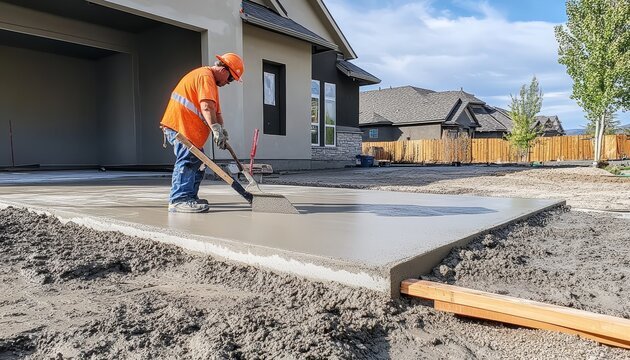
Commercial buildings need strong, safe, and long-lasting concrete work. Every parking lot, warehouse floor, sidewalk, and foundation depends on quality construction. That is why choosing the right Commercial Concrete Contractor matters. A skilled contractor helps create structures that stay strong for many years. At the same time, proper planning reduces future repairs and costly delays.
Many property owners know they need concrete work, but they often do not understand who performs these jobs. Learning the role of a contractor helps people make better decisions before starting a project. It also helps them understand why experience, planning, and safety matter during construction.
Understanding “What is a Concrete Contractor?”
Many people ask, “What is a Concrete Contractor?” The answer is simple. A concrete contractor plans, prepares, pours, finishes, and repairs concrete for different types of buildings and structures. Some contractors focus on homes, while others specialize in commercial properties.
Commercial projects often involve larger crews, bigger equipment, and stricter safety rules. As a result, these jobs require careful planning from start to finish.
A contractor usually handles several important tasks, including:
- Site preparation before pouring concrete
- Building forms that shape the concrete
- Mixing and placing concrete correctly
- Leveling and finishing surfaces
- Protecting fresh concrete while it cures
- Repairing damaged concrete when needed
A good contractor also follows local building codes. Furthermore, they work closely with engineers, architects, and project managers. This teamwork keeps projects moving safely and efficiently.
Why Commercial Concrete Projects Need Specialized Skills
Commercial construction differs from residential work in many ways. Larger buildings place greater pressure on foundations and floors. Therefore, every step requires careful attention.
A contractor must understand soil conditions, weather changes, drainage, and load requirements before beginning work. Small mistakes can create expensive problems later. In many cities, experienced commercial concrete contractors atlanta ga work on offices, retail centers, schools, hospitals, and industrial facilities. Although every location has unique requirements, the construction process follows similar professional standards.
Main Services Commercial Concrete Contractors Provide
Commercial contractors offer a wide variety of services within a project. Each service contributes to the durability and performance of the structure.
Examples of these services are:
- Concrete foundations
- Slab placements
- Parking lot construction
- Sidewalk construction
- Concrete curbs
- Loading docks
- Retaining walls
- Decorative concrete
- Concrete repairs
- Structural reinforcements
All these services start with the planning stage. The next stage involves the preparation of the work area and formworks. The final step is the proper finishing and curing of the concrete. Various structures require different types of concrete. For instance, warehouses require more durable concrete than sidewalks. Therefore, materials for each structure are selected based on its needs.
How Concrete Contracting Works From Start to Finish
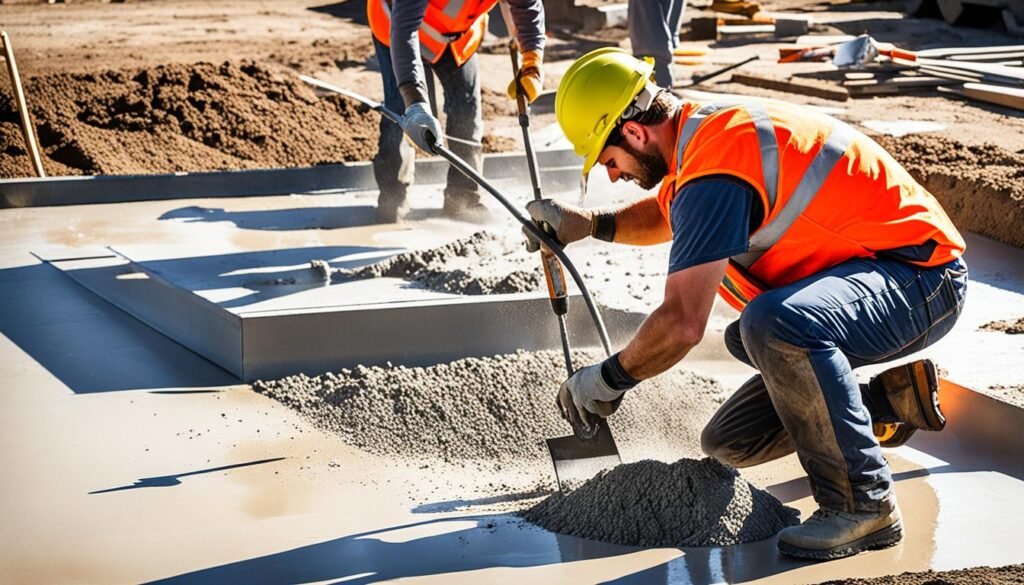
Successful concrete contracting follows a clear process. Every phase supports the next one.
Planning
The contractor reviews plans, checks the site, and calculates material needs.
Site Preparation
Workers remove debris, level the ground, and improve drainage when needed.
Form Installation
Forms create the exact shape for the concrete placement.
Reinforcement
Steel rebar or mesh strengthens the concrete against heavy loads.
Concrete Placement
Fresh concrete is poured, spread, and compacted evenly.
Finishing
Workers smooth, texture, or polish the surface depending on its purpose.
Curing
Concrete gains strength during curing. Proper moisture and temperature control help prevent cracks.
Finally, inspectors verify that the work meets local building standards before the project moves forward.
Materials and Equipment Used on Commercial Projects
Commercial concrete applications not only require cement. Various other materials are added to enhance strength, durability, and performance.
Various materials used include:
- Cement
- Sand
- Gravel
- Water
- Steel reinforcement
- Chemical admixtures
Modern equipment makes the work faster and more accurate. Concrete pumps, mixers, laser screeds, concrete finishers, and compactors are commonly used. Each has its own function. Laser screeds make flatter warehouse floors. On the other hand, concrete pumps enable the placing of concrete in difficult areas. Some online searches may include unrelated terms such as Residential Awning Cleaning in San Diego CA. Although useful for building maintenance, that service has no connection to commercial concrete construction. Understanding the difference helps property owners find the right professional for each project.
Common Problems Commercial Contractors Help Prevent
Concrete seems to be easy material to work with, but numerous problems arise due to hasty installation. Experienced constructors eliminate this kind of danger by means of careful planning and quality control.
Problems that are often seen are:
- Cracks on the surface
- Uneven floors
- Bad drainage
- Weak foundations
- Scaling
- Premature wear
- Water damage
Often the problems arise even before pouring concrete. Improper soil treatment or wrong reinforcements lead to future corrections. In the same way, weather conditions affect the curing process. Hot weather can make concrete dry out too quickly. Some online searches also mention unrelated services such as Professional Awning Cleaning in Riverside CA. While building maintenance remains important, those services solve different property needs than commercial concrete construction.
Choosing the Right Commercial Contractor
Choosing the correct contractor goes beyond comparing prices; other factors come into play. Licensing, insurance, references, and past work should be sought out. It is also important to ask for a written estimate that includes labor costs, materials, time frame, and warranties. Communication is an important factor in staying on schedule, and planning cuts down on unforeseen costs.
Long-Term Value of Professional Concrete Construction
Most concrete structures tend to last for many years. In that respect, a proper installation process pays off for many years.
Here are some of the advantages of having well-made commercial concrete:
- Increased lifespan
- Reduced maintenance cost
- Increased safety
- Enhanced aesthetic appeal
- Increased structural strength
- High property value
Inspecting your concrete structure regularly can help prolong its life. Small problems today may become big problems tomorrow. Property owners need to be vigilant in checking their cracks, drainage system, wear on surface, and expansion joints all year round.
Building Strong Foundations Starts With Smart Decisions
Construction of all commercial properties requires good quality concrete construction. It will help the owners of such properties to make wise decisions prior to commencing the construction. Good planning, good material, professional work, and inspections make better and durable constructions. By knowing the whole process, it becomes easy for the people to ask the right questions. Those businesses considering the construction of their commercial building using concrete may learn from some of the trusted companies in the industry like Big D’s Concrete LLC.
FAQs
1. What are the roles of a commercial concrete contractor?
The concrete contractor carries out installation, repair, and maintenance of concrete work on commercial sites such as buildings, parking lots, sidewalks, warehouses, and others.
2. How long does the commercial concrete last?
With proper installation and maintenance, commercial concrete can last from 30 to 50 years or even longer.
3. Why is curing concrete essential?
Concrete takes time to harden through curing. Curing ensures that the concrete will not crack or break easily after it sets.
4. What should be taken into consideration by the property owner prior to hiring the contractor?
Some factors that should be considered include experience, licensing, insurance, previous works done on commercial projects, safety procedures, references, and written estimates.
5. Is it possible to repair the commercial concrete?
Yes, many defects such as cracks, uneven surface and wear can be fixed and it may be less expensive to repair concrete than replace it.